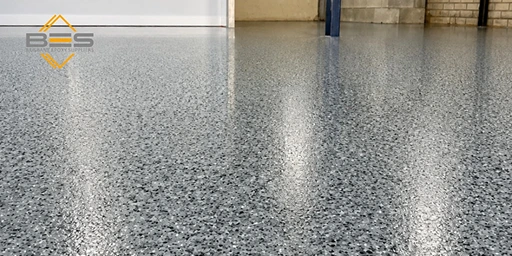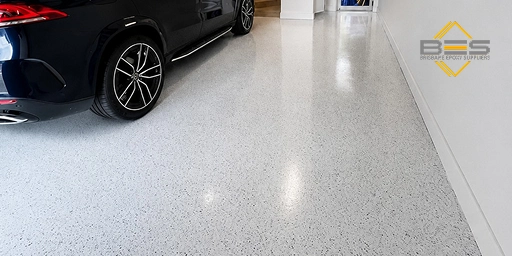
An epoxy flake floor could be exactly what you need. This system upgrades ordinary concrete into a strong, visually appealing surface that requires minimal upkeep — making it one of the most popular flooring choices for Brisbane homeowners, Queensland contractors, and commercial businesses alike. Thanks to their durability and customisable design, these floors are ideal for both residential and industrial environments, especially garages and workshops.
In this guide, you’ll discover everything about epoxy flake floors — how they’re made, their benefits, installation steps, and what to expect in terms of cost in Brisbane and Queensland. All products mentioned are available from Brisbane Epoxy Suppliers, with delivery across Brisbane and Queensland.
What Is an Epoxy Flake Floor?
This decorative system does more than just coat the surface — it enhances both function and aesthetics.
Already know about the flakes themselves? Our separate guide covers epoxy flakes in detail — including types, sizes, and how to choose the right colour blend. This guide focuses on the complete epoxy flake floor system — from installation to cost.
Components and Structure
Flake epoxy flooring is applied in multiple stages, each layer adding to its durability and design:
- Primer/Basecoat: The process begins with an epoxy primer for optimal adhesion, followed by a pigmented base layer. “The pigmented layer sets the base tone and provides the adhesive surface needed for the flakes to stick.”
- Decorative Flakes: While the base is still tacky, vinyl or polymer flakes are evenly broadcast across the surface. The amount and style of these chips influence the overall look, whether subtle or bold.
- Topcoat(s): Once the flakes set and any loose particles are removed, one or more clear topcoats (such as epoxy, polyurethane, or polyprotic) are applied. These layers lock in the flakes, improve resistance to wear and chemicals, provide UV protection, and deliver the desired gloss or matte finish.
How It Differs from Regular Epoxy Floors
The key difference lies in the flakes. Standard epoxy floors provide a solid color finish using just epoxy coats. An epoxy flake floor incorporates the decorative flakes between the basecoat and topcoat. This results in enhanced visual appeal with endless color variations, improved surface texture aiding slip resistance, better camouflage for minor concrete flaws, and often a thicker, more durable overall system compared to plain epoxy coatings.
Key Benefits of Epoxy Flake Flooring
Using epoxy flake floors offers numerous important benefits.
High Durability and Strength
This flooring is tough. The mixture of epoxy resins and flakes with a durable topcoat forms a surface that resists impacts, heavy use, vehicle loads, chipping, and surface wear. This flooring stays strong through hard work while preventing oil, gas, and cleaning chemical damage.
Decorative and Customizable Appearance
Epoxy flake floor delivers exceptional visual appeal. You can design your epoxy flake flooring however you want, thanks to manufacturers who offer many different colored and sized flakes to match your vision. The possibilities for personalization are vast; exploring glitter and decorative flake types shows just how unique these floors can be.
Slip Resistance
Epoxy floor flakes create better traction than smooth surfaces, especially when the floor is wet. Epoxy floors naturally resist slipping, which protects people from accidents in their garage, workshops, kitchen, and walkways. Traction can be enhanced further by adding special materials to the surface when needed.
Low Maintenance and Easy Cleaning
The topcoat surface forms a strong barrier that prevents any type of dirt or liquid from passing through. You can clean the surface easily by using a broom and a mop with a gentle cleaning solution. The seamless design helps keep the surface more hygienic, as there are no joints where mold or bacteria can develop.

Best Places to Use Epoxy Flake Floors
The tough and attractive nature of epoxy flake floor makes it ideal for installation in various room types.
Residential Areas (e.g., kitchens, basements)
Flake epoxy floor systems can be used throughout a home because they defend against moisture and improve looks in basement spaces and serve as durable coatings in laundry rooms, utility rooms, and kitchens. They protect the space from regular use while making the home look better.
Garage Floors
This remains the prime application across Brisbane and Queensland. Garage floors face tough conditions — heated tyres, spilled chemicals, and frequent heavy impacts. A flake-coated epoxy surface offers a tough, low-maintenance finish that resists staining and keeps the space looking clean and well-lit. A quality garage floor epoxy flake solution adds significant value and usability to any Queensland property. Browse our epoxy systems to find the right kit for your garage size and condition.
Commercial & Retail Spaces
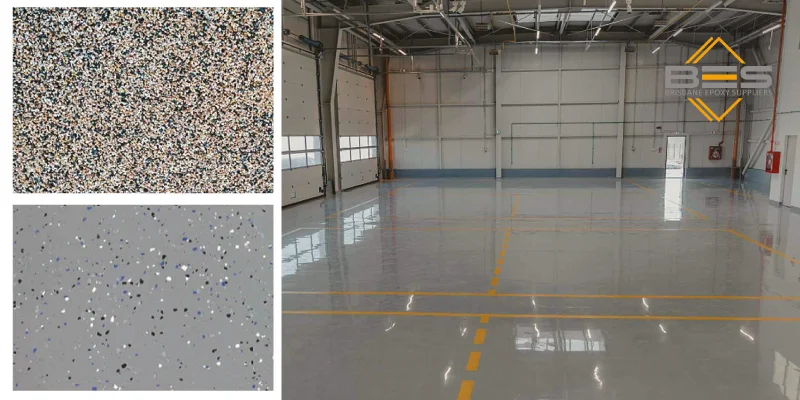
Brisbane showrooms, Queensland retail stores, salons, cafes, and schools all benefit from flooring that withstands high foot traffic while looking professional and clean. An epoxy flake floor offers both customisable designs and low maintenance needs, potentially reducing long-term costs. Specialised flake systems for outdoor covered entryways use UV-stable topcoats — ideal for Queensland’s harsh sun and humidity. See our epoxy coatings range for commercial-grade options.
Industrial Kitchens and Workshops
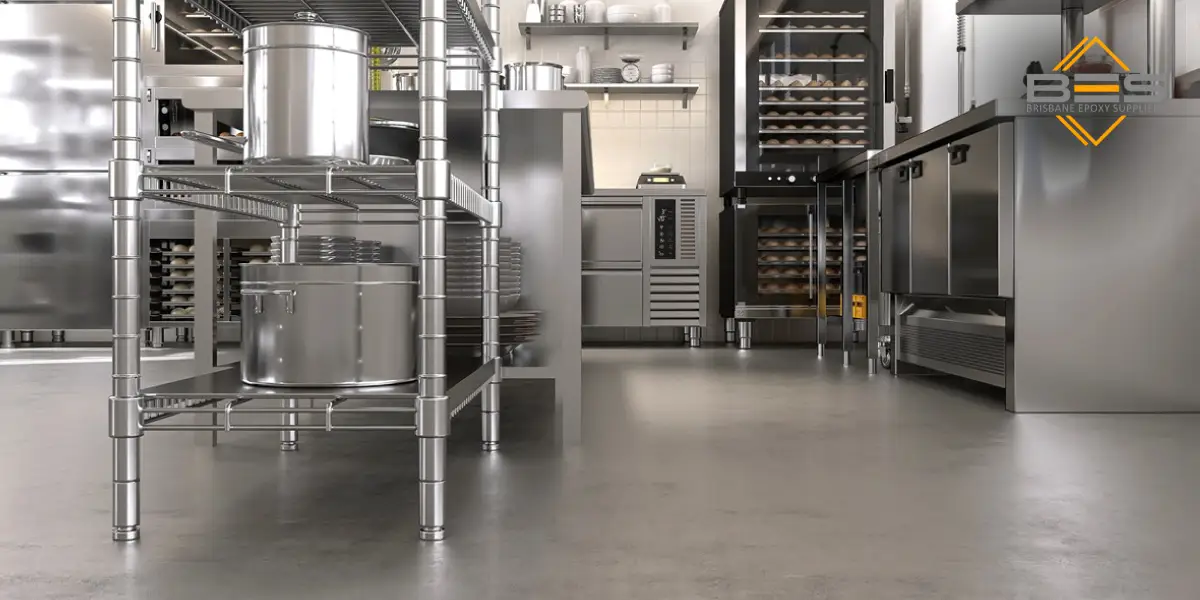
For Brisbane commercial kitchens, Queensland workshops, and industrial labs needing hygiene, safety, and chemical resistance, epoxy flake flooring is the ideal solution.
The seamless, easy-clean surface, combined with enhanced slip resistance, meets strict safety and health standards across Queensland food service and industrial environments. For food-safe and chemical-resistant options, see our epoxy coatings range.
How Epoxy Flake Floors Are Installed
Proper installation is key to the longevity and performance of an epoxy flake floor. Although it’s possible to install it yourself, hiring a professional usually ensures a higher-quality and longer-lasting outcome.
Surface Preparation (Grinding, Cleaning)
This is non-negotiable for success — especially in Brisbane and Southeast Queensland where concrete slabs can have moisture issues due to the subtropical climate. The concrete must be meticulously prepared for the epoxy to bond correctly:
- Cleaning: Removing all dirt, grease, oil, and failing previous coatings.
- Profiling: Mechanically grinding the concrete is the preferred method to create a porous surface profile. Acid etching is a less common alternative.
- Repairing: Filling cracks and patching any damaged areas for a smooth substrate.
- Dust Removal: Thoroughly vacuum all concrete dust after preparation.
For all preparation tools including grinders, degreaser, and vacuums, see our accessories range.
Applying Primer and Basecoat
An epoxy primer may be applied first for maximum adhesion. Then, the pigmented epoxy basecoat is spread evenly, creating the color foundation and the wet layer needed to receive the flakes.
Broadcasting Flakes on Wet Surface
Immediately after applying the basecoat, the chosen epoxy floor flakes are scattered uniformly over the wet epoxy. A full broadcast ensures complete coverage and maximum texture. The technique involves tossing flakes upward for even distribution.
Sealing with Topcoat (Glossy or Matte)
Once the basecoat cures, loose flakes are removed (sweeping, vacuuming). The surface might be lightly scraped to smooth any high points. Then, one or two clear protective topcoats are applied. Polyprotic or polyurethane topcoats are often favored for their superior UV resistance and durability. This final layer seals the system and provides the desired sheen.
Types of Flakes Used in Epoxy Flooring
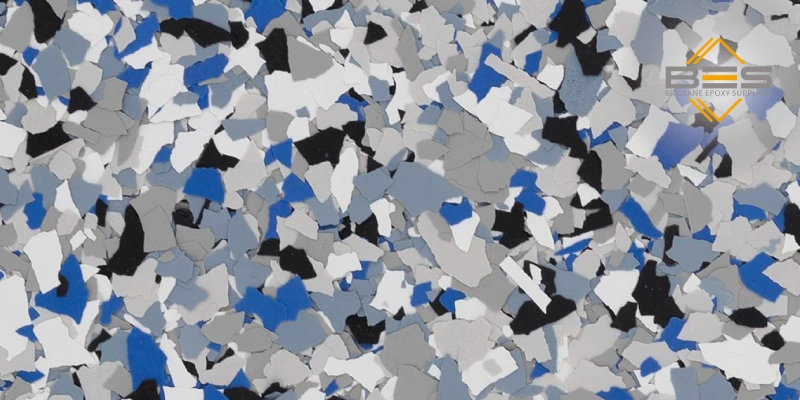
The “flake” in epoxy flake floor comes in several varieties.
Vinyl Flakes
Most commonly, these flakes are made from vinyl compounds and offered in countless colors, blends, and sizes (typically 1/16″ to 1″). They provide the classic multi-speckled look and are durable and flexible.
Metallic Flakes
These are essentially glitter additives, often used within metallic epoxy systems for shimmering effects. Smaller metallic flakes can sometimes be mixed into vinyl blends or lightly broadcast for added sparkle. Check out glitter and decorative flake types for more on these options.
Micro Flakes
Significantly smaller (e.g., 1/32″), microflakes create a finer, more subtle granite-like texture. They can be used alone or blended with larger flakes for added visual density.
Epoxy Flake Floor vs. Plain Epoxy Coating
Though related, these systems have key differences. Plain epoxy provides a smooth, solid color finish. An epoxy flake floor offers a textured, multi-hued appearance that hides imperfections better.
Application-wise, the flake epoxy floor involves the extra step of broadcasting flakes, which naturally enhances slip resistance but adds time and complexity. Plain epoxy is simpler to apply but may require anti-skid additives for similar traction. Generally, the flake system results in a thicker coating. Cost-wise, plain epoxy is usually less expensive due to fewer materials and potentially less labor. The flakes and additional application steps make epoxy flake floors the more premium option. Knowing what comes in a flake epoxy kit versus professional materials helps understand cost variations.
How Much Does Epoxy Flake Flooring Cost?
The final price tag for an epoxy flake floor depends on several variables.
Factors Affecting the Price (Size, Flake Type, Epoxy Brand)
Key cost drivers for an epoxy flake floor in Brisbane and Queensland include the total project size (larger areas cost more overall but less per square metre), the concrete’s condition (extensive repairs add cost), the quality of epoxy materials (professional grade costs more but lasts significantly longer), the type and density of flakes chosen, the number of protective topcoats, and whether it’s a professional installation or DIY.
\For a cost-effective starting point, browse our epoxy systems and epoxy coatings — or contact our team for a free product recommendation suited to your budget and project size.
Price Comparison with Other Flooring Options
Compared to other floors, epoxy flake floors offer excellent long-term value, typically falling in the mid-to-high price range. They cost more than basic concrete sealers or most DIY epoxy kits (consider what comes in a flake epoxy kit often includes less robust materials). Professional flake systems are generally pricier than plain professional epoxy.
The cost is often comparable to quality tile or LVP, but without grout lines to maintain. While potentially less than hardwood, epoxy flake offers superior moisture and impact resistance. It can be similar in price to polished concrete but provides a different look and often better stain protection. The upfront investment reflects its durability and low maintenance needs over time.
Conclusion
Epoxy flake flooring combines long-term strength with outstanding visual appeal — and it’s one of the smartest flooring investments you can make for a Brisbane home, Queensland garage, or commercial space. It handles intense traffic better than most alternatives, offers full design customisation, and requires minimal maintenance over its lifespan.
Whether you’re a DIY enthusiast in Brisbane’s southside or a contractor working across Southeast Queensland, getting the right materials from the start is everything. Brisbane Epoxy Suppliers stocks professional-grade epoxy systems, epoxy coatings, and application accessories — with delivery across Brisbane and Queensland.
Ready to get started? Shop our range or contact our team for a free product recommendation today.